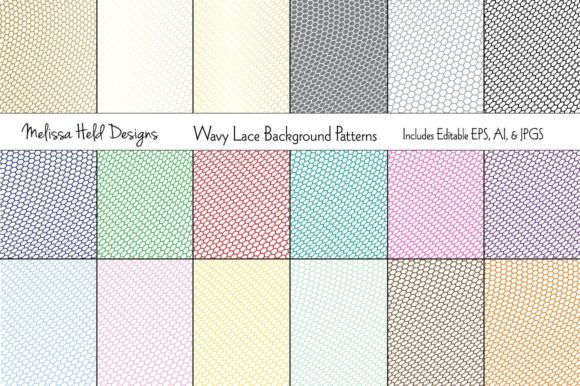
Wavy Lace Background Patterns
Wavy lace background patterns are a versatile design element that can add elegance and sophistication to a wide range of creative projects. These patterns feature intricate, flowing lines that mimic the look of traditional lace, offering a delicate and refined aesthetic. For designers, artists, and crafters, wavy lace backgrounds provide an appealing way to enhance visual appeal without overwhelming the overall composition.
One notable collection of wavy lace background patterns is offered by Melissa Held Designs. This collection includes 18 different color variations—spanning pastels, brights, and metallics—each displayed on a white background. The patterns are designed for use in various applications, such as gift wrap, blog and web design, scrapbook paper, and other digital or paper-based projects. The versatility of these designs makes them a valuable resource for both professional and personal use.
What Are Wavy Lace Background Patterns?
Wavy lace background patterns are graphic elements characterized by their soft, undulating lines and lace-like textures. Unlike seamless patterns, which repeat without visible edges, these designs are typically not seamless, meaning they may have defined borders or edges. This distinction is important when considering how the pattern will be used in a project. The non-seamless nature of these patterns allows for more precise placement and control over the design’s appearance.
The collection from Melissa Held Designs features all patterns at a standard size of 12 x 12 inches. This size is ideal for many design applications, including print and digital formats. The patterns are available in multiple file types, ensuring compatibility with a variety of design software and platforms.
Why Consider Wavy Lace Background Patterns?
There are several reasons why someone might choose to incorporate wavy lace background patterns into their work. First, the aesthetic appeal of lace patterns can elevate the visual quality of a design, making it more engaging and memorable. Whether used in a digital layout or a printed piece, the subtle texture of lace adds depth and interest.
Another benefit is the wide range of colors included in the Melissa Held Designs collection. With options in pastels, brights, and metallics, users can select a shade that complements their project’s theme or brand identity. This flexibility makes the collection suitable for a broad audience, from wedding planners to graphic designers looking for unique elements to enhance their work.
Additionally, the availability of editable files in AI, EPS, PNG, and JPG formats provides users with the ability to customize the patterns according to their specific needs. This level of editability is particularly useful for professionals who require precise adjustments to fit their design requirements.
Benefits and Considerations
Using wavy lace background patterns offers several advantages. They can help create a cohesive look across multiple design elements, such as invitations, banners, or stationery. Their decorative nature also makes them ideal for adding a touch of class to otherwise simple designs.
However, there are some considerations to keep in mind. Since the patterns are not seamless, they may not be the best choice for large-scale repeats or continuous backgrounds. Users should also be aware of the file sizes and resolutions to ensure compatibility with their intended application. For example, high-resolution images may be necessary for print projects, while lower-resolution files may suffice for digital use.
Another factor to consider is the licensing and usage rights associated with the patterns. While the collection from Melissa Held Designs appears to allow for a variety of uses, it is essential to review the terms of use to avoid any potential legal issues. Understanding these restrictions ensures that the patterns are used appropriately and within the allowed scope.
Situations Where It May Be a Strong Fit
Wavy lace background patterns are particularly well-suited for projects that require a soft, elegant feel. For instance, they can be used in wedding-related designs, such as invitations, place cards, and table settings. The patterns’ delicate appearance aligns well with themes that emphasize romance, tradition, or refinement.
They are also beneficial for digital design projects, such as website headers, blog backgrounds, or social media graphics. In these contexts, the patterns can add visual interest without distracting from the main content. Their availability in multiple file formats further enhances their usability in different digital environments.
In addition, the collection’s variety of colors makes it a good fit for branding and marketing materials. Businesses looking to create a distinctive visual identity can use the patterns to differentiate their products or services from competitors.
Situations Where Alternatives May Be Worth Considering
While wavy lace background patterns offer many benefits, there may be situations where alternative design elements are more appropriate. For example, if a project requires a bold or modern aesthetic, a lace pattern may not be the best choice. In such cases, geometric shapes, solid colors, or abstract designs could be more effective.
Additionally, for projects that require seamless repetition, such as wallpaper or fabric patterns, the non-seamless nature of these designs may limit their effectiveness. Users should evaluate the specific requirements of their project before deciding to use these patterns.
Finally, those with limited design experience may find the editing process of the AI and EPS files challenging. In such cases, using pre-designed templates or simpler graphic elements could be a more practical option.
Decision-Making Insights
When evaluating whether to use wavy lace background patterns, it is important to consider the project’s goals, target audience, and visual style. If the objective is to create a refined, elegant look, these patterns can be an excellent choice. However, if the design requires a more dynamic or contemporary feel, alternatives may be more suitable.
Users should also assess their technical skills and the tools available to them. The availability of editable files provides flexibility, but the ability to manipulate these files effectively depends on the user’s experience with design software. For those unfamiliar with such tools, working with a designer or using pre-made versions may be more efficient.
Ultimately, the decision to use wavy lace background patterns should be based on how well they align with the project’s overall vision and requirements. By carefully considering the benefits, limitations, and practicalities of these designs, users can make informed choices that enhance the quality and impact of their work.